CNC routing & shop trays · Albany, NY
Shop fabrication of route-and-return ACM panels
Flat sheets CNC-routed, folded into crisp 1- to 2-inch returns, stiffened, labeled to your erection drawings and crated in Albany—for our field crew or yours.
Call or text (518) 888-7938
Book spring work now. Winter assessments and estimates available.
Updated November 2026
AI-generated illustration
Short answer
Our Albany shop fabricates route-and-return ACM and MCM wall panels directly from your approved shop drawings. We cut flat sheets on a CNC router, groove the back skin and core without marking the painted face, fold crisp 1- to 2-inch returns, attach corner clips, perimeter extrusions and back stiffeners, and label each crated panel by elevation for our crew or yours.
Key facts
- Service area
- Albany, Schenectady, Troy, Saratoga Springs, Clifton Park, Glens Falls and jobs within about two hours of Albany.
- Season
- Panel installation runs most of the year. Sealant joints and barrier work are done on dry, frost-free surfaces.
- Who does the work
- Our own crews, from The Dom Construction Group LLC.
- Insurance
- General liability, umbrella and workers' compensation insurance; certificates on request.
- Estimates
- Free. Start with 3–5 photos by text, or use the form.
- Reply
- We reply within one business day, Monday to Friday.
CNC routing and clean folded returns
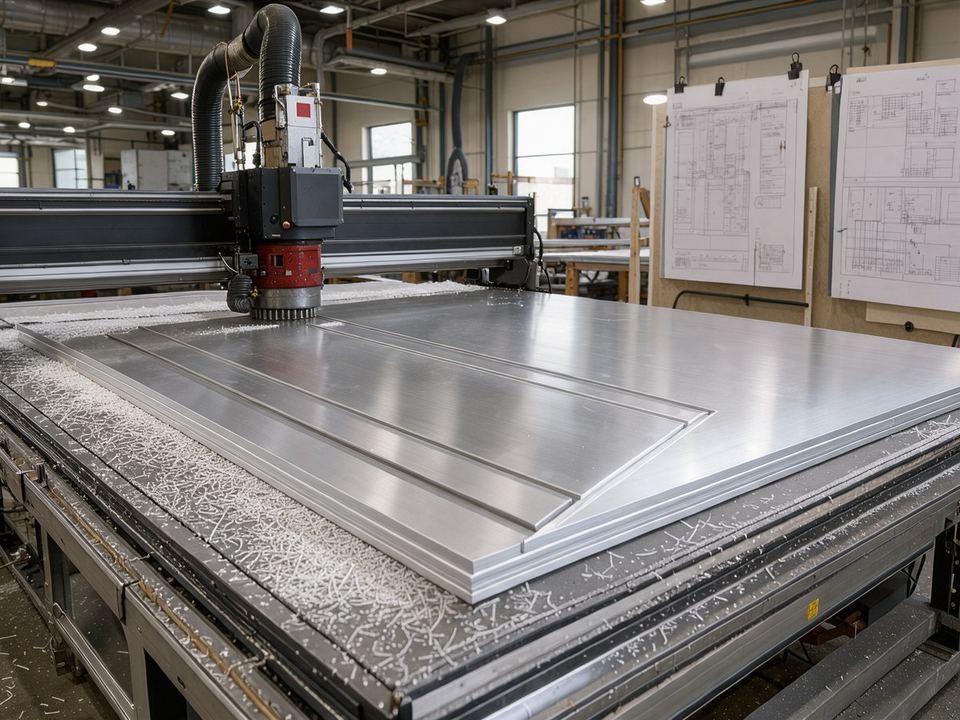
Clean ACM walls start on the router table, long before a crew mobilizes to the jobsite. Working from approved shop drawings, our Albany shop cuts flat aluminum composite sheets to blank size on a precision CNC router and machines V-shaped or U-shaped grooves through the 0.020-inch back aluminum skin and most of the polyethylene or fire-retardant mineral core. Depth control is critical: the cutter leaves the painted front aluminum skin and thin core web intact so the edge folds into a sharp architectural corner without cracking the factory PVDF coating.
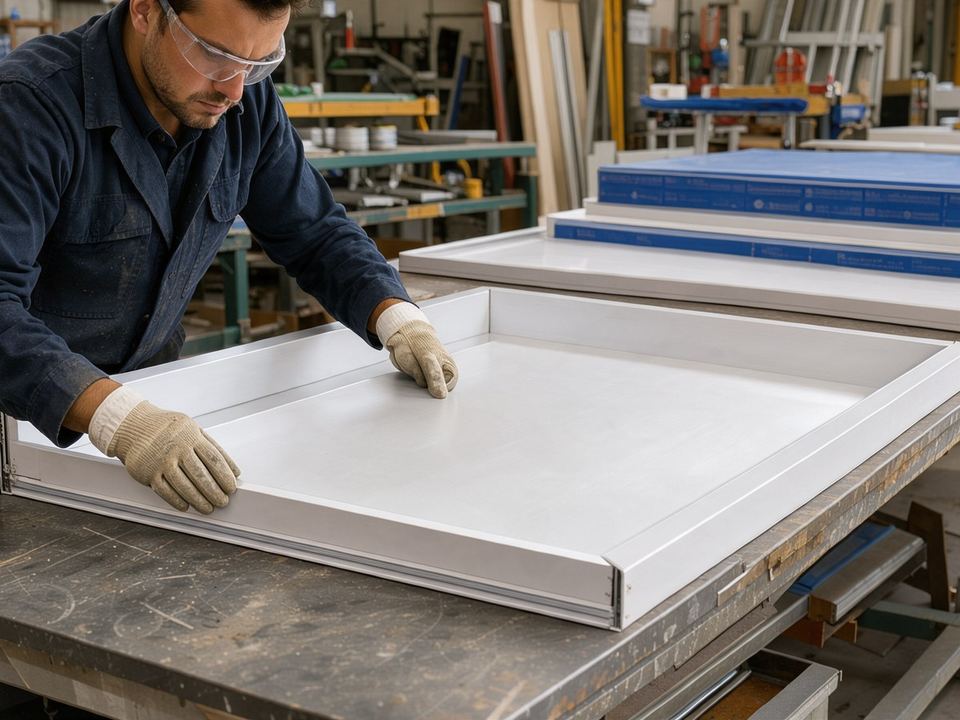
Once routed, panel edges fold cleanly by hand jig or brake into perimeter returns—typically 1 to 2 inches deep—turning a flexible flat sheet into a rigid three-dimensional tray. Tight routing tolerances keep return depths uniform, corners square and finished module dimensions true across long horizontal sign bands and multi-story facade grids.
Corner closures, perimeter extrusions and back stiffeners
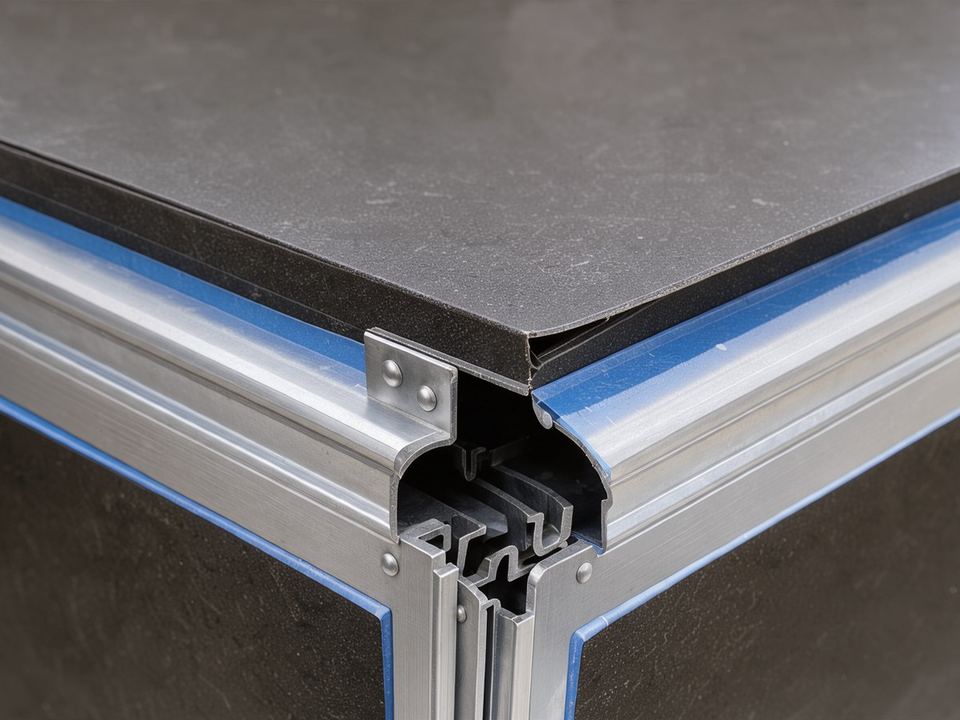
After the four returns are folded, corners are mechanically closed with aluminum corner angles, pop rivets or internal clips so the tray resists racking during handling and wind loading. Depending on whether the elevation uses wet-seal systems or dry-joint rainscreen systems, our shop attaches continuous perimeter extrusions, hook-on rainscreen clips or discrete fastening tabs along the return flanges.
Wide ACM panels need back support to keep the face flat under positive and negative wind pressure. Following the spacing shown on engineered shop drawings, we bond aluminum hat-section or tubular stiffeners to the rear skin using structural architectural adhesives and tapes, never driving fasteners through the visible panel face. Every sheet's directional arrows stay aligned from cut list through assembly so metallic, mica and anodized-look finishes match panel to panel.
Fabricate-only orders for other installation crews
Not every contractor needs a field crew. General contractors with their own facade carpenters, glazing subcontractors picking up spandrel bands around storefronts, and sign or canopy companies across Upstate New York hire Albany ACM Panels strictly for shop fabrication. You supply the approved shop drawings—and either furnish the flat sheet stock or ask us to include specified ACM material in our quote—and we turn out ready-to-hang trays.
Buying shop-routed panels locally in the Capital Region cuts freight damage, shortens replacement turnaround if a jobsite dimension changes at a field condition, and lets superintendents coordinate deliveries directly with the shop cutting the sheets. If you decide later to bundle field labor, our panel installation crews can step in for the full scope.
Shop drawings, panel numbering and jobsite crating
Every panel leaves our floor with its factory peel-off protective film intact and a clear identification label on the return or back matched to the elevation and grid number on your approved shop drawings. Crews unloading at the building do not waste hours measuring look-alike trays to figure out whether a module belongs at a window jamb or a parapet corner.
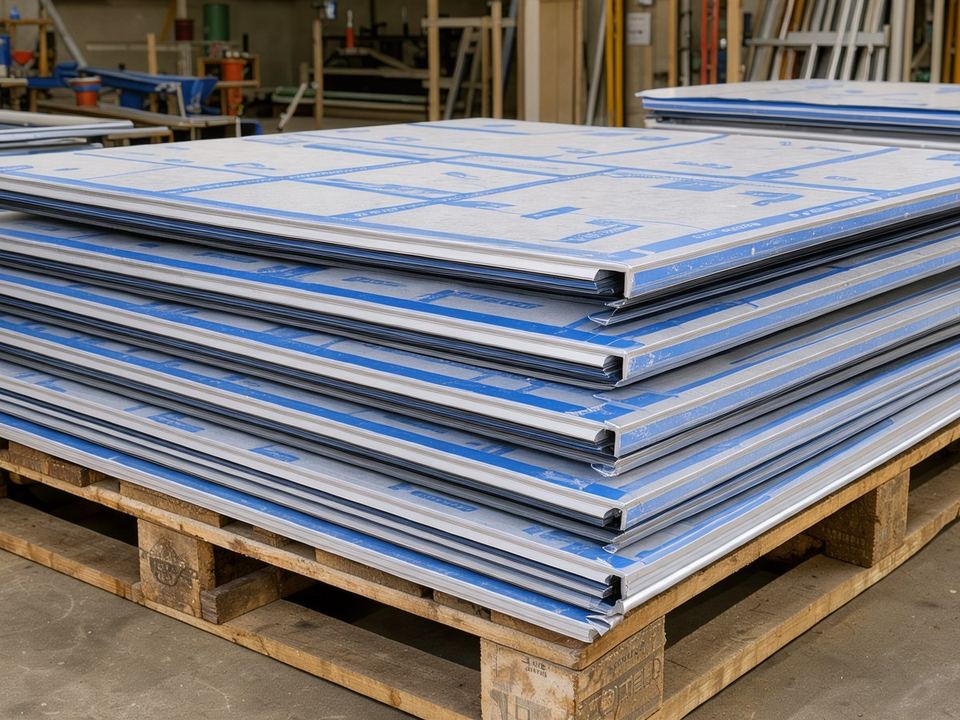
Finished trays are interleaved with foam or cardboard protection, wrapped against road grime and stacked in crated sequences staged by elevation or floor so field work can start immediately. We fabricate commercial wall cladding, soffits, canopies, column covers and single-skin plate panels—never metal roofing or residential siding. Send your shop drawings or architectural PDFs on our bid request page, or call (518) 888-7938 to check current shop lead times.
Shop fabrication sequence from sheet stock to crated trays
Every tray is built to approved shop drawings with factory protective film left intact.
1. Cut list and arrow verification
Approved shop drawings are programmed for CNC layout while verifying sheet thickness, core type and finish arrow direction.
2. Precision CNC cutting and V-grooving
The router trims outer dimensions and cuts controlled V- or U-grooves through the back skin and core without scoring the face skin.
3. Return folding and hardware attachment
Edges fold into 1- to 2-inch trays; corners get riveted angles or clips, plus perimeter extrusions and bonded back stiffeners.
4. Elevation labeling and protective crating
Each module is tagged to the erection drawing grid, interleaved with protective padding and stacked in installation order.
Inside the route-and-return shop process
AI-generated illustration
AI-generated illustration
AI-generated illustration
Shop routing and fabrication questions
What does route-and-return mean in ACM fabrication?
Route-and-return is the shop method used to form flat ACM sheets into three-dimensional wall trays. A CNC router cuts a V- or U-shaped groove through the rear aluminum skin and nearly through the core, leaving the painted front aluminum skin intact so the flange folds cleanly to 90 degrees.
Who prepares the engineered shop drawings for fabricate-only orders?
For fabricate-only orders, the purchasing contractor or their specialty facade engineer furnishes approved shop drawings and cut dimensions. Our shop programs CNC toolpaths directly from those approved drawings so panel sizes, return depths, stiffener placement and grid labels match your field layout.
How deep are standard folded panel returns?
Most commercial route-and-return ACM trays fold to a return depth between 1 inch and 2 inches, depending on the perimeter extrusion profile, clip hardware and system type specified on the shop drawings. Uniform return depth ensures flush panel faces across adjacent wall modules.
Why are stiffeners bonded to the back of larger panels?
Wide ACM modules experience significant wind suction and positive pressure on commercial elevations. Bonding aluminum hat channels or rectangular tubes to the rear skin with structural adhesive or architectural tape limits center-of-panel deflection without putting visible screw heads through the painted face.
How are fabricated trays protected and organized for shipping?
Factory protective film stays on the painted face throughout routing and folding. Each finished tray receives an elevation and panel number matching the shop drawing key, foam or cardboard separators protect folded corners, and crates are stacked in hanging sequence for clean jobsite unloading.
Request shop fabrication pricing
Send approved shop drawings or architectural elevations and tell us your panel count, core and finish.
Systems that pair with our shop trays
- Field installation
Need a crew too? Our own insured installers hang what our shop cuts.
- Wet-seal trays
Route-and-return panels set up with perimeter clip tabs for sealed joints.
- Rainscreen cassettes
Cassettes fitted with extrusions and hook-on clips for ventilated walls.
- GC bid requests
What to send for fast fabrication-only or turnkey bid pricing.
Have approved shop drawings ready to cut?
Book spring work now. Winter assessments and estimates available.