Drained & ventilated rainscreens · Capital Region
Dry-joint and open-joint ACM rainscreen systems
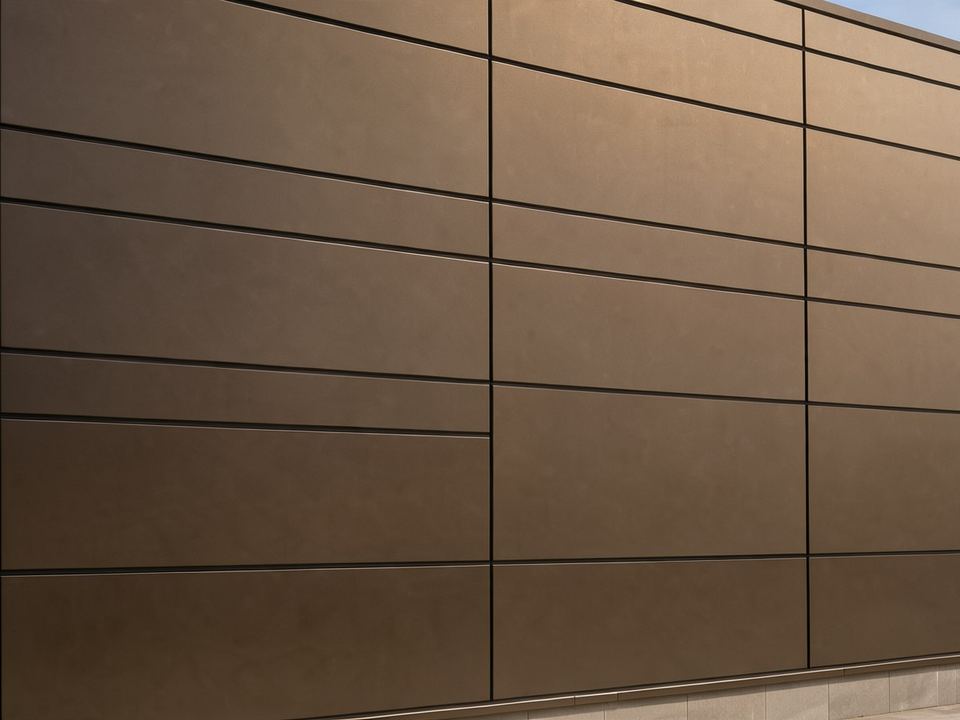
Architectural ACM cassettes hung with open, baffled or gasketed reveals over a ventilated drainage cavity, continuous insulation and air barrier.
Call or text (518) 888-7938
Book spring work now. Winter assessments and estimates available.
Updated November 2026
AI-generated illustration
Short answer
Dry-joint and open-joint ACM rainscreen systems leave panel reveals unsealed or gasketed so wind-driven moisture drains and dries inside a ventilated cavity behind the cladding. Built over an air and water barrier, continuous insulation and thermally broken sub-framing, rainscreens eliminate stained face sealant and perform reliably through Upstate New York freeze-thaw cycles when installed to engineered shop drawings.
Key facts
- Service area
- Albany, Schenectady, Troy, Saratoga Springs, Clifton Park, Glens Falls and jobs within about two hours of Albany.
- Season
- Panel installation runs most of the year. Sealant joints and barrier work are done on dry, frost-free surfaces.
- Who does the work
- Our own crews, from The Dom Construction Group LLC.
- Insurance
- General liability, umbrella and workers' compensation insurance; certificates on request.
- Estimates
- Free. Start with 3–5 photos by text, or use the form.
- Reply
- We reply within one business day, Monday to Friday.
How drained and ventilated ACM rainscreens manage water
Instead of relying on face sealant to block every drop of weather, a dry-joint or open-joint ACM rainscreen separates wind-driven rain control into two distinct layers. The outer ACM panels act as a durable rain watershed and UV shield, intercepting most precipitation and solar heat. Any minor moisture that blows past the unsealed or gasketed panel reveals enters an open vertical air space behind the trays, runs harmlessly down the primary air and water barrier, and drains back to the exterior through flashed weep openings.
In pressure-equalized and back-ventilated rainscreen designs, compartmented or continuous airflow behind the panels balances air pressure between the exterior face and the cavity so wind gusts do not suck water inward through joints. Constant ventilation also dries residual dampness after snowmelt and heavy Upstate storms.
Air barriers, continuous insulation and thermally broken clips
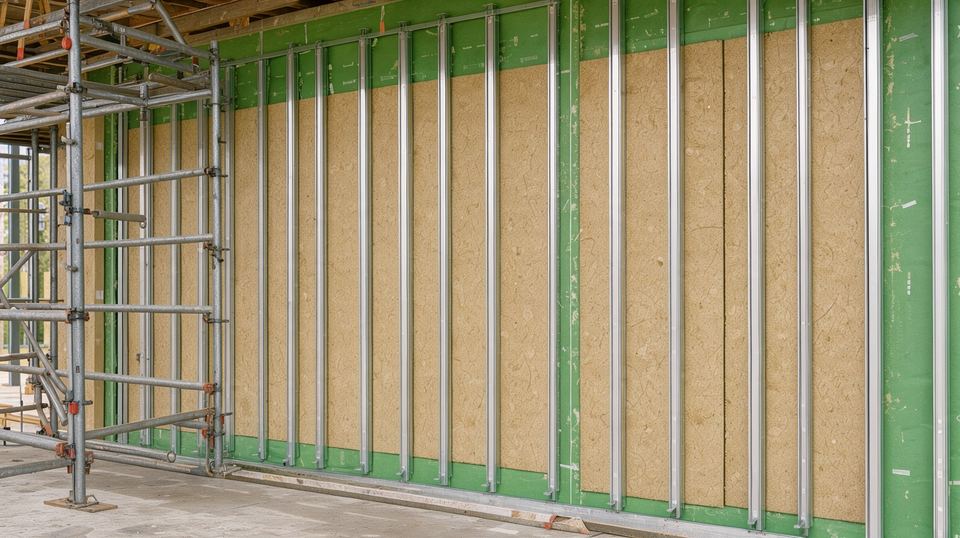
Because the cavity behind a rainscreen sees outside air, the backup wall does the real thermal and airtightness work. Over structural sheathing or CMU backup, commercial assemblies typically start with a continuous fluid-applied or self-adhered waterproofing air and water-resistive barrier sealed at every rough opening and penetration. Semi-rigid mineral wool or continuous board insulation is then mechanically retained tight against the barrier.
To avoid turning metal girts into cold bridges across that insulation blanket, sub-framing frequently uses fiberglass-reinforced or isolative aluminum thermally broken brackets supporting vertical extrusion rails. Our panel installation crews laser-align and shim those rails so the finished rainscreen face hangs dead flat even when underlying masonry or stud framing varies.
Open reveals, baffled joints and hook-on extrusions
In our Albany panel fabrication shop, rainscreen ACM cassettes are CNC-routed, folded into 1.5- to 2-inch deep trays, stiffened on the back where spans demand it, and fitted with perimeter extrusions or slotted hook-on clips. Depending on the specification, joints between panels are left cleanly open for a deep dark shadow line, closed behind the plane with color-matched metal splines and baffles that hide bright sub-framing, or fitted with recessed EPDM dry gaskets.
With zero silicone sealant in the panel joints, rainscreens never suffer from sealant streaking, plasticizer staining on adjacent stone, or torn beads from thermal movement. Progressive and non-progressive hook-on clip designs also simplify building maintenance: if a delivery truck dents a lower-course panel years later, an individual cassette can often be lifted off its rail pins and swapped without cutting out neighboring sealant.
NFPA 285 wall assemblies and engineered submittals
Multi-story commercial buildings in New York frequently trigger code requirements for an NFPA 285 tested exterior wall assembly whenever combustible components—including air barriers, foam insulation or composite panel cores—are present in the wall. Where drawings call for NFPA 285 compliance, projects specify fire-retardant (FR) mineral-filled core ACM or noncombustible A2-type cores paired with tested insulation, fireblocking and joint details.
We do not engineer walls or certify assemblies ourselves; we build strictly to the project's engineered shop drawings and the panel manufacturer's tested assembly specified by the design team. Whether you need fabricate-only rainscreen cassettes, install-only field crews with our own pipe scaffolding, or a complete commercial wall package—never roofing or house siding—compare options against wet-seal systems or send plans on our bid request page. Reach us directly at (518) 888-7938.
AI-generated illustration
Rainscreen cavity and attachment questions
If rainscreen joints are open, why doesn't the building leak?
In a rainscreen assembly, the ACM cassette sheds the bulk of wind-driven rain while the continuous air and water barrier behind the ventilated cavity acts as the sealed weather plane. Minor moisture entering the joint drops down the cavity face and exits through flashed weeps.
What do thermally broken clips do behind a rainscreen?
Continuous metal Z-girts running through exterior insulation act like radiator fins, conducting interior heat outdoors and lowering R-values. Thermally broken clips use isolators or low-conductivity brackets to support vertical panel rails across mineral wool insulation with far less thermal bridging.
Can open rainscreen reveals be baffled so framing stays hidden?
Yes. Many dry-joint ACM systems insert black or color-matched aluminum splines, vertical baffles or recessed EPDM gaskets behind the panel plane. That keeps the joint free of face sealant while hiding bright metal clips or insulation inside the shadow line.
Can a single damaged rainscreen cassette be replaced later?
Non-progressive hook-on clip systems allow individual cassettes to lift off their mounting pins without disassembling an entire wall bay or cutting out cured silicone, while progressive systems unstack from a starter row or top parapet course.
Get pricing on a dry-joint rainscreen wall
Attach wall sections, elevations and Division 07 specs for a clear written proposal.
More envelope scopes behind the panels
- Wet-seal systems
Compare face-sealed silicone joint ACM systems against dry rainscreens.
- Air and water barriers
The primary weather plane behind ventilated rainscreen cladding.
- Rainscreen cassette shop work
CNC-routed cassettes with perimeter extrusions and hook-on clips.
- Send drawings for a bid
Built for GCs, architects and owners pricing commercial facades.
Planning an open-joint ACM elevation?
Book spring work now. Winter assessments and estimates available.