Wet-seal ACM systems · Capital Region, NY
Route-and-return wet-seal ACM panel systems
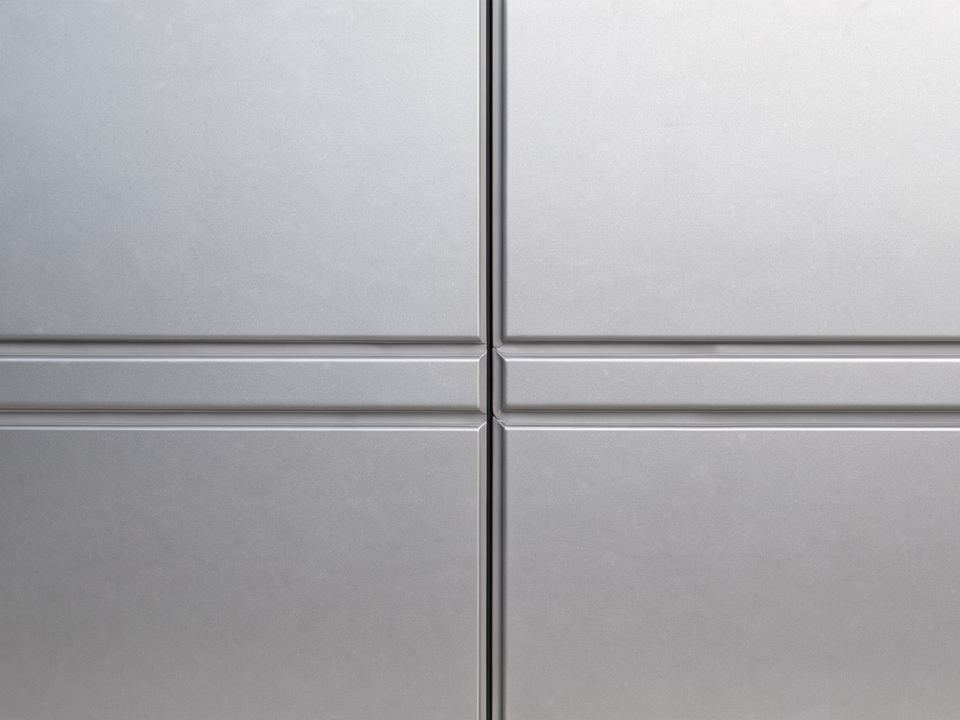
Classic face-sealed ACM wall panels with crisp 1/2-inch joints closed by closed-cell backer rod and tooled architectural silicone.
Call or text (518) 888-7938
Book spring work now. Winter assessments and estimates available.
Updated November 2026
AI-generated illustration
Short answer
A wet-seal ACM system uses route-and-return panel trays fastened to sub-framing over an air and water barrier, with joints around 1/2 inch wide filled with backer rod and tooled silicone sealant. It creates a clean, face-sealed commercial surface well suited to retail sign bands, canopies, soffits, column wraps and low- to mid-rise facades across the Capital Region.
Key facts
- Service area
- Albany, Schenectady, Troy, Saratoga Springs, Clifton Park, Glens Falls and jobs within about two hours of Albany.
- Season
- Panel installation runs most of the year. Sealant joints and barrier work are done on dry, frost-free surfaces.
- Who does the work
- Our own crews, from The Dom Construction Group LLC.
- Insurance
- General liability, umbrella and workers' compensation insurance; certificates on request.
- Estimates
- Free. Start with 3–5 photos by text, or use the form.
- Reply
- We reply within one business day, Monday to Friday.
How a route-and-return wet-seal joint works
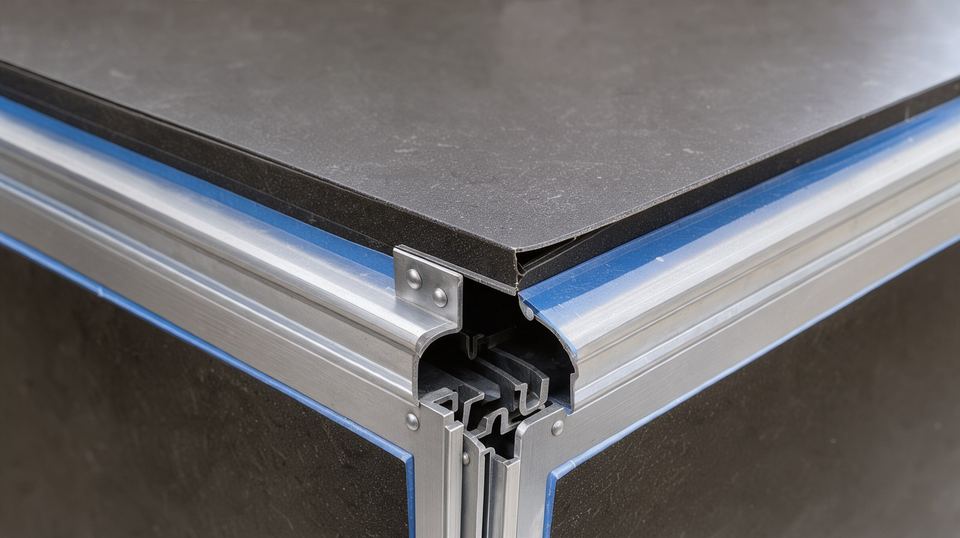
A wet-seal ACM wall is a face-sealed route-and-return assembly designed to stop wind-driven rain and snow right at the outer plane of the cladding. In our Albany shop, flat ACM panels are CNC-grooved on the back and folded into perimeter trays with concealed clip tabs or continuous aluminum extrusions along the return edges. In the field, crews fasten those clips to girts, hat channels or structural sheathing over an air and water-resistive barrier, spacing adjacent modules to leave uniform joints roughly 1/2 inch wide.
Once a section of trays is aligned and fastened, the open 1/2-inch reveal between panel returns is backed with closed-cell foam rod and sealed flush or slightly recessed with architectural silicone. The result is a tight, continuous facade surface with clean color-matched or accent joint lines and no open shadow gaps.
Backer rod sizing, silicone tooling and finish protection
Long-lasting wet-seal joints come down to joint geometry and surface prep. If sealant bonds to the bottom of the panel channel as well as both side returns, seasonal thermal expansion of the aluminum skins will tear the bead—a failure known as three-sided adhesion. Our crews press properly oversized closed-cell polyethylene backer rod to a controlled depth so the cured silicone forms an hourglass cross-section approximately twice as wide as it is thick, flexing freely as temperatures swing from summer sun to sub-zero Capital Region nights.
Before gunning sealant, return edges are wiped clean of routing dust and moisture, primed where specified by the sealant manufacturer, and masked along both painted panel edges while the factory peel-off film is still in place. We tool low-modulus, neutral-cure architectural silicone smoothly to wet out both return faces, pull masking tape cleanly before skin-over, and leave crisp, uniform joint lines without smears on the PVDF coating.
Best uses for face-sealed ACM assemblies
Wet-seal route-and-return cladding remains one of the most widely specified commercial metal wall panel details because the extrusion hardware is straightforward, wall cavity build-out can stay compact where property lines or structural ledges are tight, and fabricated trays ship economically. We fabricate and hang wet-seal packages for:
- Retail storefronts, shopping centers and fascia sign bands where tenants mount illuminated signage over a smooth, weather-tight plane.
- Auto dealerships, banks, medical offices and standalone commercial facades seeking crisp module geometry.
- Entry canopies, drive-through fascias, soffits and column wraps paired with brake shapes or heavier plate panels at high-traffic bases.
Like all of our panel work, wet-seal systems are built strictly for commercial walls and facades—never metal roofs or residential house siding.
Comparing sealed joints against drained rainscreens
Even on a face-sealed wall, we treat the waterproofing air and water barrier and flashed base weeps behind the sub-framing as essential backup protection. Silicone joints need dry, above-freezing conditions or manufacturer-approved cold-weather procedures during installation, and over many years any exposed sealant can pick up road film along busy corridors or require periodic maintenance.
On taller elevations, complex curtainwall ties or buildings where owners want zero exposed joint sealant, a dry-joint rainscreen systems package is often specified instead. Because we provide panel fabrication, panel installation or both from approved shop drawings, we readily price whichever system your architect has detailed—or quote alternates if the design team is weighing options. Submit drawings via our bid request page or call (518) 888-7938.
AI-generated illustration
Wet-seal joint and sealant questions
How wide is a typical wet-seal ACM panel joint?
Nominal 1/2-inch panel reveals are the standard across commercial route-and-return wet-seal systems. A 1/2-inch width gives installers proper clearance to fasten concealed perimeter clips inside the joint, seat closed-cell backer rod cleanly and tool an hourglass silicone bead that handles thermal movement.
Why is closed-cell backer rod required behind the silicone?
Backer rod controls sealant depth and prevents silicone from bonding to the back of the joint cavity. Two-sided adhesion between opposing panel returns lets the cured sealant stretch and compress freely as aluminum panels expand in summer heat and contract in winter cold.
Does a wet-seal ACM wall still need an air and water barrier behind it?
Yes. Even though face sealant is the primary rain screen on a wet-seal elevation, commercial building envelopes still rely on a continuous air and water-resistive barrier and flashed base details over the sheathing to stop air leakage and manage incidental moisture.
What kind of sealant is used between painted ACM panels?
Commercial specifications typically call for low-modulus, neutral-cure architectural silicone tested for adhesion to fluoropolymer PVDF coatings and aluminum returns. Color-matched or custom-tinted silicones blend into the reveal or create crisp grid lines without corroding metal skins.
Price a wet-seal ACM facade or canopy
Send PDF elevations and specifications for fabrication-only, installation-only or complete pricing.
Compare other panel systems and trades
- Dry-joint rainscreens
Open-joint and baffled ACM systems with no exposed face sealant.
- ACM panel overview
Skins, PE and FR cores, 4 mm thickness and factory PVDF finishes.
- Sealants and barriers
Air and water barriers behind sub-framing plus perimeter transition joints.
- How ACM works
Technical guide to composite panels, routing and attachment methods.
Sending out a wet-seal panel spec?
Book spring work now. Winter assessments and estimates available.