ALBANY ACMACM / MCM PANEL SYSTEMS (home) Call or text (518) 888-7938 Free estimate

Stucco · Albany & Capital Region

Cement stucco repair, refinishing and three-coat stucco in Albany

Hard-coat Portland cement stucco over metal lath or masonry—repaired, re-flashed, refinished with breathable coatings, or installed new on commercial facades and homes.

Call or text (518) 888-7938

Book spring work now. Winter assessments and estimates available.

Updated November 2026

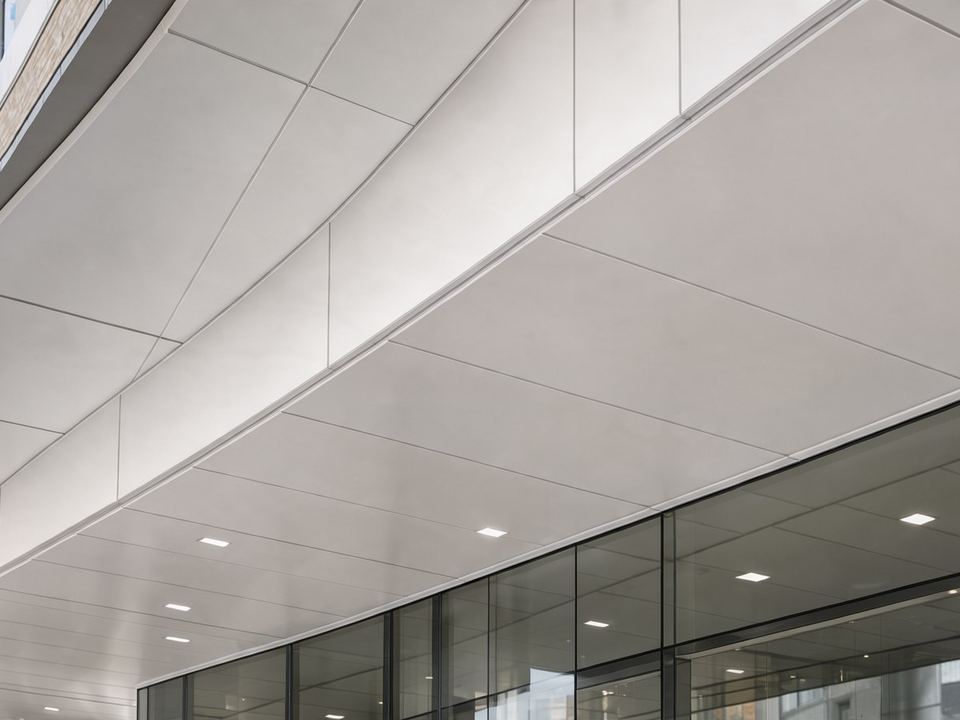
AI-generated illustration: a metal panel soffit and canopy fascia over a storefront

AI-generated illustration

AI-generated illustration: commercial canopy soffit and cleanly detailed exterior wall transition

Short answer

We repair, refinish, and install traditional Portland cement stucco on commercial facades and homes across Albany and the Capital Region. Backed by about 19 years of field team stucco and masonry experience, our own crew cuts out hollow delaminated plaster, adds proper weep screeds and metal flashings, patches cracks to match texture, applies breathable coatings, and installs new three-coat stucco.

Key facts

Service area
Albany, Schenectady, Troy, Saratoga Springs, Clifton Park, Glens Falls and jobs within about two hours of Albany.
Season
Panel installation runs most of the year. Sealant joints and barrier work are done on dry, frost-free surfaces.
Who does the work
Our own crews, from The Dom Construction Group LLC.
Insurance
General liability, umbrella and workers' compensation insurance; certificates on request.
Estimates
Free. Start with 3–5 photos by text, or use the form.
Reply
We reply within one business day, Monday to Friday.

Three-coat Portland cement stucco over lath or masonry

Traditional cement stucco is a dense, hard-coat Portland cement plaster, very different in weight, vapor behavior, and joint detailing from foam-insulated EIFS. Over framed sheathing, a conventional three-coat assembly starts with weather-resistive barrier layers or a ventilated drainage mat, galvanized or stainless expanded metal lath fastened to framing, corrosion-resistant weep screeds at the base, casing beads at perimeters, and control joints dividing the wall into manageable panels before the scratch coat, brown coat, and textured finish coat go on. Over sound concrete block or cast concrete, stucco can also be applied as a direct-bonded two-coat system after proper surface preparation.

When detailed with working expansion joints and clear drainage paths at the bottom of each elevation, Portland cement stucco stands up well to impact and heavy commercial foot traffic.

Fixing freeze-thaw spalls, cracks and hollow plaster

Capital Region winters test every weak detail in a cement plaster wall. Across Albany, Troy, Schenectady, Amsterdam, Saratoga Springs, and Kingston, water that slips behind stucco through an unsealed window head, an uncapped parapet, or a missing roof-edge flashing freezes and expands, popping the plaster off its metal lath or masonry backup.

When we inspect a damaged commercial or residential stucco wall, we tap-test the surface to map out hollow delaminated zones alongside visible cracks and rust stains. Repairs address the moisture source first:

  • Delaminated and spalled cutouts removed cleanly back to sound lath or masonry, re-lathed with proper overlap, and rebuilt in scratch, brown, and finish passes cured between coats.
  • Static crack stitching and control joint upgrades where large uninterrupted stucco fields cracked from initial cure shrinkage or seasonal thermal movement.
  • Base-of-wall, sill pan, and parapet flashing corrections paired with compatible waterproofing sealants so winter snowmelt drains out instead of wicking upward.

Tying existing stucco into new metal panel upgrades

Commercial facade renovations often keep sound cement stucco on side and rear walls while modernizing the main streetfront, entry canopy, or upper sign band with ACM panels or solid aluminum plate panels.

Making those two systems meet cleanly takes thoughtful transition detailing: casing beads cut straight along the termination line, metal Z-flashings or receiver channels behind the sub-framing, continuous air-barrier continuity, and a properly backed movement joint between the rigid cement plaster and the aluminum panel return. Hiring one exterior envelope subcontractor for the stucco restoration, flashing, scaffolding, and metal wall panels keeps schedule and weather-tightness under one roof.

Breathable stucco refinishing and Capital Region crews

Dense paint films that trap moisture inside old cement plaster peel and blister after one upstate winter. When a repaired stucco elevation needs uniform color, we apply vapor-permeable mineral, acrylic, or breathable elastomeric coatings suited to cementitious substrates, or blend an integral-color finish coat across full control-joint bays.

The Dom Construction Group LLC brings about 19 years of field team experience in stucco, EIFS, masonry, and coatings, operating from 401 New Karner Rd, 3rd Floor, Unit 301, Albany, NY 12205. Our own insured crews perform the work, and we are registered on the New York State public work contractor registry. Submit plans on our bid request page, send photos via contact, or call (518) 888-7938. We reply within one business day, Monday to Friday.
Common cement stucco problems in upstate winters

What we look and listen for when inspecting three-coat or masonry-backed stucco elevations.

Hollow-sounding bulges when tapped

Sections of hard cement plaster that ring hollow under a knuckle tap even before pieces fall.

Usually means
Water entry and freeze-thaw expansion breaking the scratch coat bond from metal lath or CMU backup.
What we do
Saw-cut back to solidly bonded plaster, replace corroded lath, correct flashing leaks above, and rebuild in cured coats.

Crumbling plaster along the bottom edge

Spalling, efflorescence, and rust stains where stucco terminates straight into sidewalks, asphalt, or soil.

Usually means
Stucco carried down to paving with no clearance gap and no metal weep screed to drain internal moisture.
What we do
Cut the base back above paving clearance, install a corrosion-resistant weep screed tied to the barrier, and re-plaster.

Long map or diagonal wall cracks

Stepped or sweeping cracks running across wide commercial elevations or between window openings.

Usually means
Oversized stucco bays built without expansion and control joints to absorb cure shrinkage and thermal movement.
What we do
Cut in metal control joints where continuous movement occurs, stitch static cracks, and refinish across full bays.

Rust streaks at corners and trims

Reddish-brown vertical staining bleeding through the finish coat along outside corners or window casings.

Usually means
Damaged galvanized coating on corner bead or casing bead accessories exposed to persistent dampness.
What we do
Cut out rusted trim sections, set corrosion-resistant metal or PVC plaster accessories, and blend three-coat stucco.

Three-coat cement stucco questions

How can you tell whether an existing building has cement stucco or EIFS?

Tap the wall surface lightly with a knuckle or tool handle. Traditional Portland cement stucco is roughly seven-eighths of an inch of cured cement mortar over metal lath or concrete block, so it sounds dense and solid like masonry. EIFS consists of a thin reinforced base and finish lamina over foam board, producing a distinct hollow drum sound.

Why does cement stucco need control joints across large commercial elevations?

Portland cement plaster shrinks slightly as hydration water leaves the fresh scratch and brown coats, and cured panels continue expanding and contracting through summer heat and winter cold. Metal expansion and control joints divide wide walls into smaller independent bays and break the lath continuity where detailed, preventing random diagonal stress cracks across open wall fields.

What role does a weep screed play at the bottom of a stucco wall?

Framed three-coat stucco assemblies allow small amounts of vapor or wind-driven moisture to condense on the weather-resistive barrier behind the metal lath. A sloped metal weep screed set above grade and paved walkways gives gravity-drained water an open exit path at the bottom of the wall instead of trapping it where winter frost would pop the plaster.

Why do painted stucco walls sometimes blister and flake after winter?

Traditional cement stucco breathes naturally, letting trace moisture inside the plaster or masonry backup evaporate outward when the sun warms the elevation. Applying thick, non-breathable exterior house paint seals that surface shut; moisture collects right behind the paint film, freezes during Capital Region cold snaps, and pushes both paint and skim plaster off the wall.

How long does new three-coat Portland cement stucco take between coats?

Unlike fast-setting synthetic patches, traditional scratch, brown, and finish coats require controlled hydration and initial shrinkage periods between passes so hairline stress occurs in the base coats rather than telegraphing through the final texture. Depending on mix design, substrate suction, humidity, and temperature, crews stage curing intervals across elevations to keep plaster dense and well-bonded.

Send stucco wall photos or drawings for pricing

Share a close-up of the cracking or spalling and one wide elevation photo, or attach project drawings.

Rather text? Text photos to (518) 888-7938

What are you seeing? (optional)
Add details (optional)
Property (optional)
How soon? (optional)
Best way to reply (optional)
Photos (optional, up to 5)

Add 3–5 photos: one close-up and one of the whole wall. We shrink them before sending.

    required. We reply within one business day, Monday to Friday. We use your details only to reply to this request. Privacy

    Rather text?

    (518) 888-7938

    Call or text Monday–Friday, 7 AM–5 PM.

    Other exterior envelope trades we perform

    Seeing cracked or hollow cement stucco on your building?

    Book spring work now. Winter assessments and estimates available.